
-
- Education east
- Environment east
- Managing Aircraft Noise east
- Engaging with local Māori east
- Community Giving and Fundraising east
- People east
- Smart Design and Construction east
- Economic Contribution east
- Ethical Business east
New Zealand’s nearest international neighbour is more than 2000 km away, which makes Auckland Airport a vital gateway to connect people and places. But aviation also contributes to climate change and increasingly extreme weather impacts our airport, travellers, and global communities.
So, while we keep New Zealand connected, we have an important responsibility to reduce the impact of our core operations while also playing our part to decarbonise aviation.
This work is not new – we have been measuring, reporting and reducing carbon emissions under our direct control (scope 1 and 2) since 2013. We currently have a target to reduce these emissions by 90% by 2030, against the 2019 baseline, and a decarbonisation pathway underway to achieve this. However, the vast majority of Auckland Airport’s emissions occur due to the operation of aircraft and are therefore outside of our operational control (scope 3).
Auckland Airport’s primary role is to provide the right infrastructure on the ground to enable the adoption of alternate lower-emissions technologies when they become available, as well as to enable the efficient operation of the airfield to minimise fuel burn while on the ground and on approach to Auckland Airport.
Auckland Airport also has an important role to play in New Zealand’s aviation industry and takes a collaborative approach across the entire industry to decarbonise aviation.
These case studies highlight some of the work we are doing to reduce emissions from our core operations as well as the wider network.
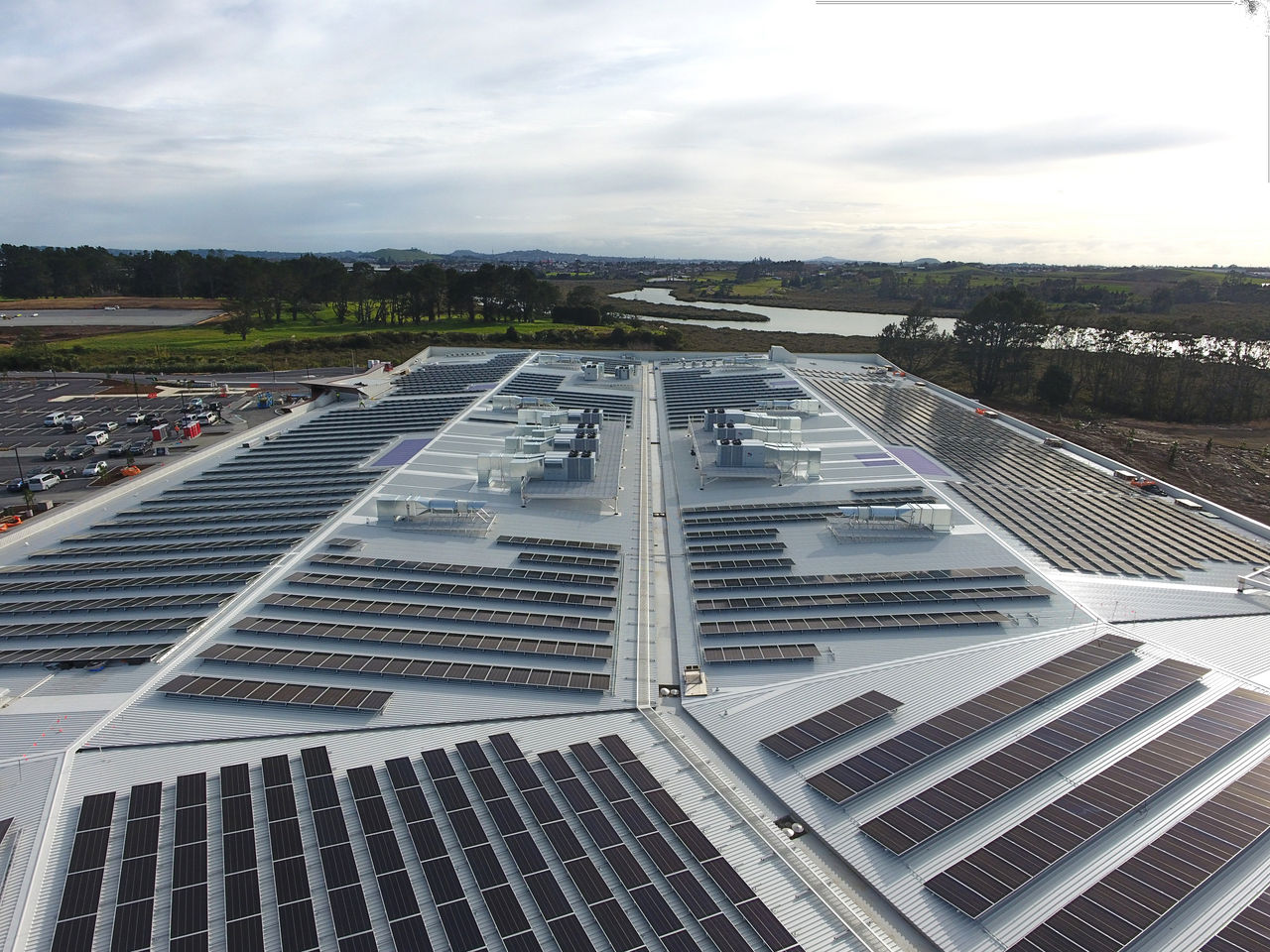
Rooftop solar arrays
Our premium outlet shopping centre, Mānawa Bay, supports one of New Zealand’s largest rooftop solar systems at 2.4 megawatts. The Transport Hub also supports a 1.2 megawatt rooftop solar array, helping to power 33 public electric vehicle charging stations. Together, the solar panels on Mānawa Bay and the Transport Hub are generating enough electricity to power the equivalent of approximately 800 homes avoiding approximately 588 tonnes of CO2 emissions per year.
With our energy demands projected to grow significantly over the next decade, we are exploring other opportunities to meet future energy needs through a combination of on-site and off-site renewable energy sources.
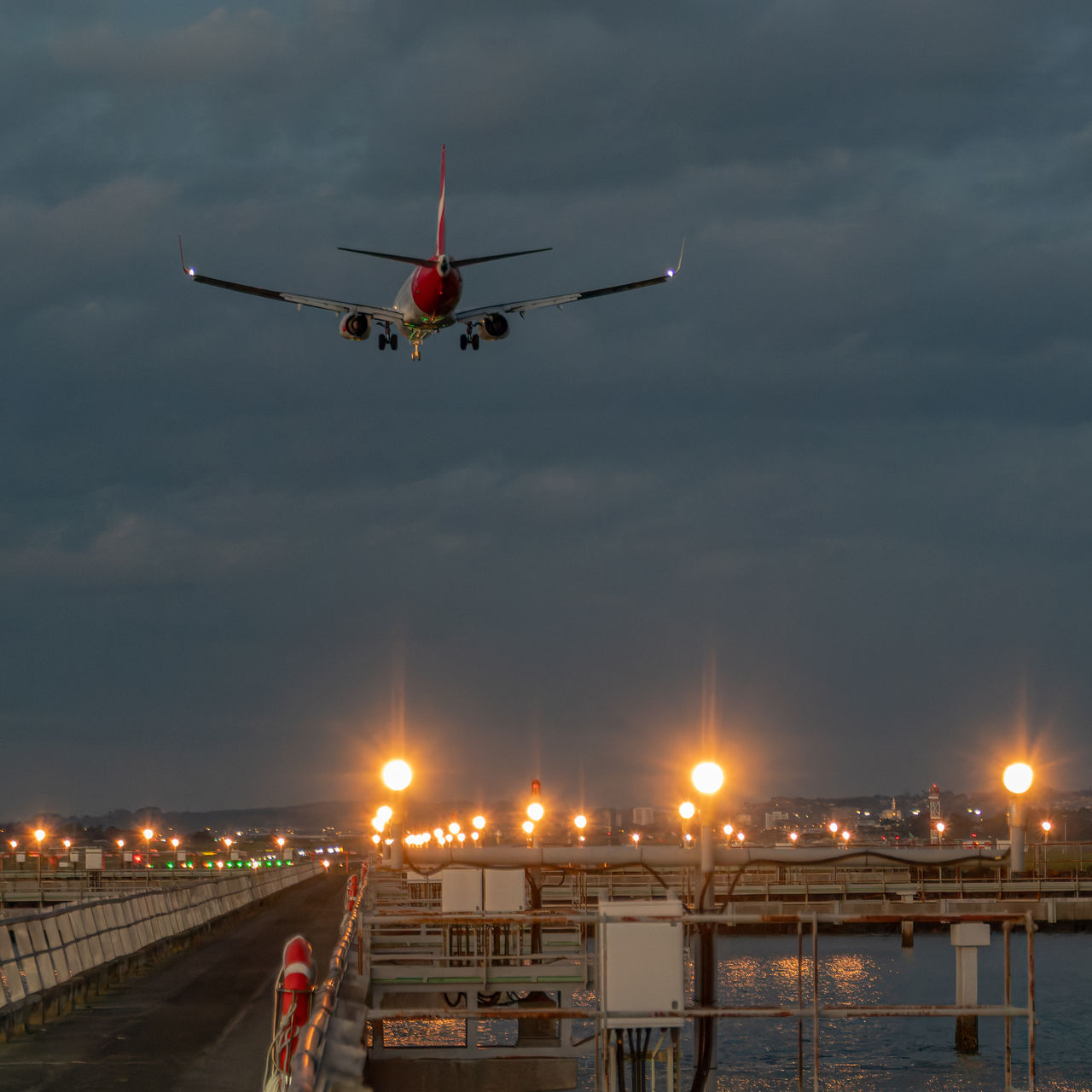
Airfield lighting goes LED
In 2024, Auckland Airport became the first in New Zealand to install LED runway lights for low-visibility landings. Around 600 LEDs now line the 3.6km runway, replacing halogen lamps to improve safety and reliability. Runway lights are vital for keeping aircraft moving safely, no matter the time of day or weather. The new LED lights and the systems put around the lighting system to keep it running smoothly are critical for achieving that level of reliability.
The upgrade supports our low-carbon strategy, using up to 70% less energy and lasting 75,000 hours compared to 5,000 for halogen. With the runway conversion complete, the next 10-year programme will replace thousands of halogen lights across taxiways, aprons, and aircraft stands.
Click here to watch video
Phasing out gas from the international terminal building
Auckland Airport operates one of New Zealand’s largest commercial air conditioning systems and is in the middle of a 10-year programme to replace the natural gas boilers with electric heatpumps. This transition started in 2023 with a trial of a 600kW heatpump featuring new technology that warms and cools air simultaneously within the same unit – the first of its kind in New Zealand. Following a successful 18-month trial, 11 more units have been installed in the International Terminal Building, allowing more of the terminal to be heated and cooled without using gas.
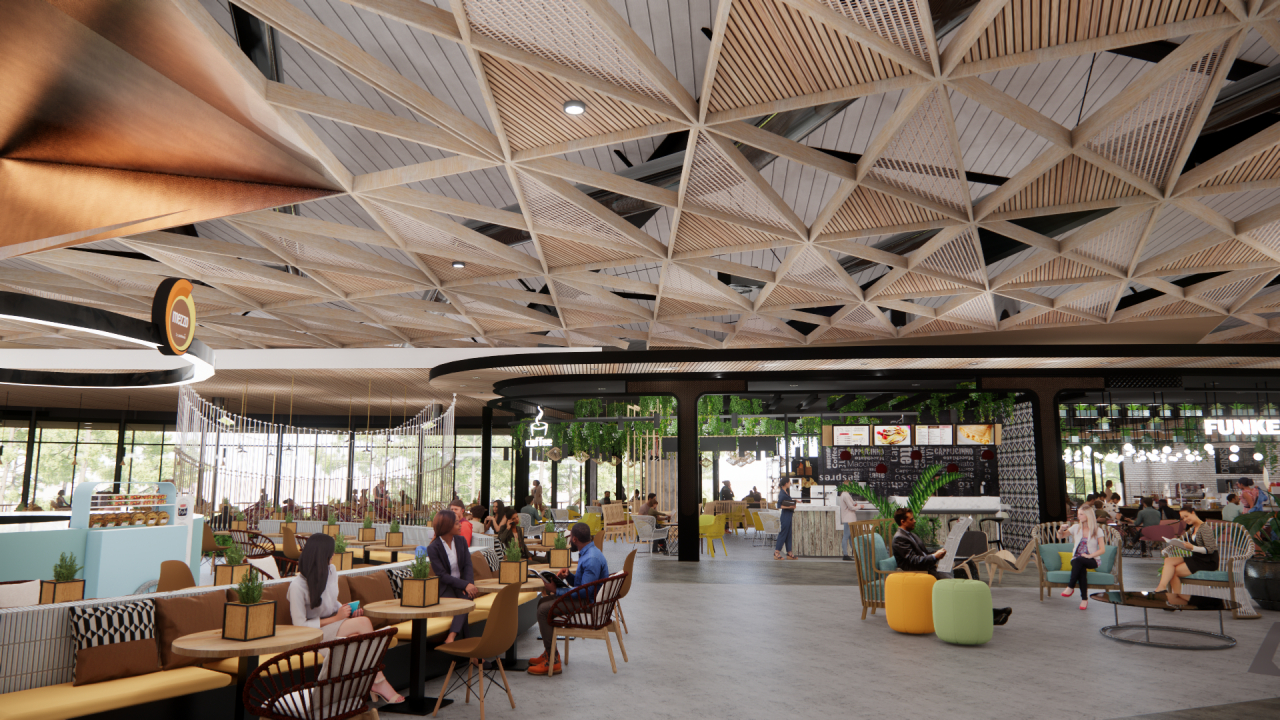
New Zealand’s first fully electric commercial foodcourt
Mānawa Bay, our premium outlet shopping centre, is the first shopping centre in New Zealand to feature a fully electric food court. This fully electric dining precinct has been modelled to achieve up to 37% energy savings compared to traditional gas-operated food courts and reduce greenhouse gas emissions from its kitchens by up to 57%.
Cutting out the use of gas on site at Mānawa Bay is one initiative that contributed to it’s 5-Star Greenstar Building rating for the design. Other initiatives included a large rooftop solar array, extensive green space and rainwater collection.
Smart, more efficient baggage handling
Auckland Airport is making a significant investment into upgrading its baggage handling system.
The new modern baggage handling system will allow bags to be individually tracked from the moment they leave the traveller’s hand through to loading onto the aircraft. Incorporating world-class technologies, the system will include 4,500 m² of baggage handling infrastructure and three new carousels.
The smart baggage system enables all day check-in, faster connection times, fewer bag jams, and is altogether, a more energy-efficient system. This system uses 50% less power to process each bag than a conventional system. This project is one of many that will pave the way for a more sustainable and lower carbon airport.
Renewable Energy Certification from Meridian Energy Limited
While Auckland Airport is seeking to maximise on-site renewable energy generation and secure a long term Power Purchase Agreement from new, off-site renewable generation, as an interim measure it has certified that it’s electricity is coming from 100% renewable sources through the purchase of Meridian Energy Limited’s Renewable Energy Certificates, or RECs. RECs certify that the electricity that we purchase is matched with an equivalent amount that is put into the national grid from one of Meridian’s hydro stations or wind farms. 100% of the proceeds of RECs go into the Meridian Decarbonisation Fund which is used to support grassroots community groups undertake decarbonisation initiatives, such as the purchase of electric vehicles or the installation of solar panels.
RECs allow us to report that our scope 2 emissions are zero, using the market-based methodology as per the Greenhouse Gas Protocol.
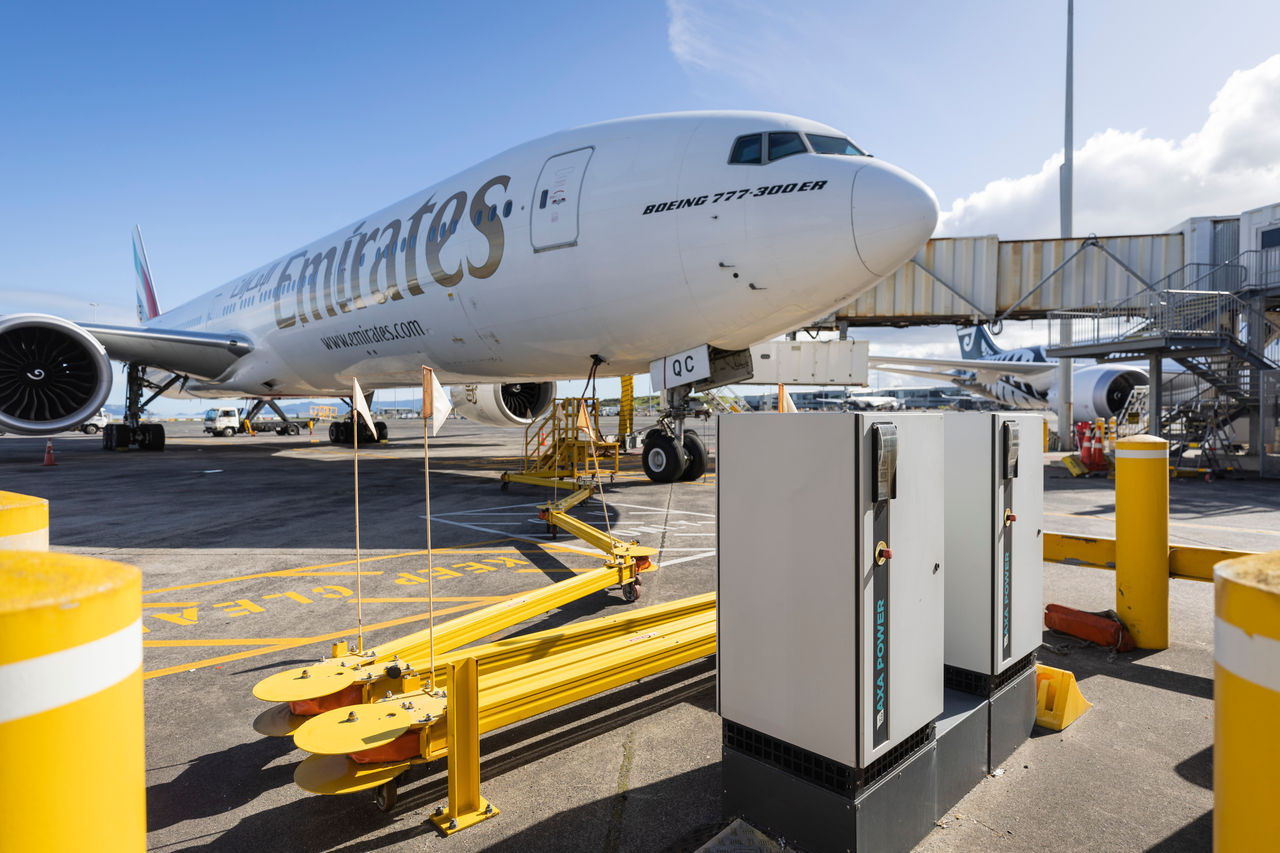
Low carbon infrastructure on the airfield
As an infrastructure provider, Auckland Airport is implementing interim solutions to support the transition of aviation to a lower-emissions future. Auckland Airport has invested in electric ground power units (GPUs) and pre-conditioned air (PCA) units at all international gates so aircraft can connect to New Zealand’s low carbon electricity supply instead of burning jet fuel while at the gate.
The Airport’s primary role is to ensure that the right infrastructure is on the ground to enable airlines to adopt alternate technologies when they become available. To prepare for low emissions technology that may be available in the future, Auckland Airport’s 2025 Master Plan has considered the infrastructure and space that will be required as new, low-emissions aircraft technology is adopted, such as electric and hydrogen-fuelled aircraft.
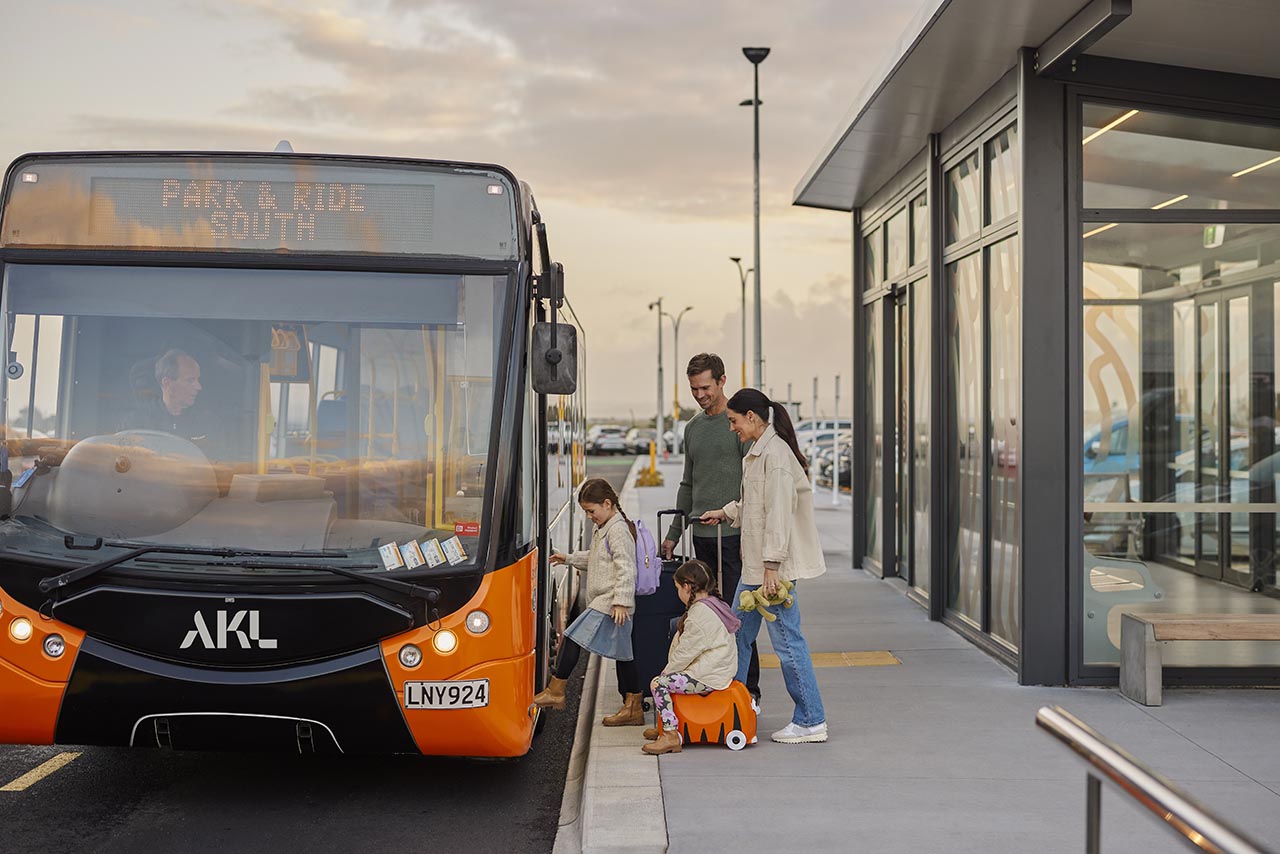
Electric vehicles
The first fully electric, low-emissions buses have joined Auckland Airport’s Park & Ride fleet, another step on the airport’s decarbonisation journey.
The opening of Park & Ride South in 2024, along with other upgrades to the road network, improved southern access to the airport and reduced traffic volumes across the airport precinct. However it doubled the number of bus trips to the terminal. Introducing electric buses into the fleet enabled bus trips to increase while maintaining Auckland Airport’s commitment to reduce scope 1 and 2 emissions.
With the buses making over 200 trips per day, the carbon savings quickly add up. In total, the buses travel 68,000 km per month and being fully electric, are avoiding approximately 39 tonnes of carbon emissions per month, when compared to diesel equivalents. This is the equivalent of 10 flights between Auckland and Wellington.
For passengers with their own electric vehicles, Auckland Airport has an EV charging hub at the shopping centre located to the north of the precinct, in addition to facilities at Mānawa Bay and the Transport Hub.